World Water Day: The Water We Return Matters
Every year on March 22nd, we celebrate World Water Day—a time to reflect on the importance of water in our lives and our responsibility to protect it. While much attention is given to conserving water, it’s equally crucial to consider the quality of the water we return to the environment. The way we handle wastewater directly impacts ecosystems, wildlife, and human health.
Why Does Wastewater Matter?
Water is a finite resource, constantly moving through the environment in a natural cycle. However, human activities disrupt this cycle by introducing pollutants that make it harder for water to be safely reused. Sewage treatment systems, including municipal wastewater treatment plants and septic tanks, rely on microorganisms to break down waste and remove harmful substances before the water is released back into nature. If we introduce the wrong materials into these systems, we make their job harder, potentially leading to pollution and environmental damage.
The Do’s and Don’ts of Wastewater Management
To protect our water sources and support efficient sewage treatment, it’s essential to be mindful of what goes down our drains. Here are some key guidelines:
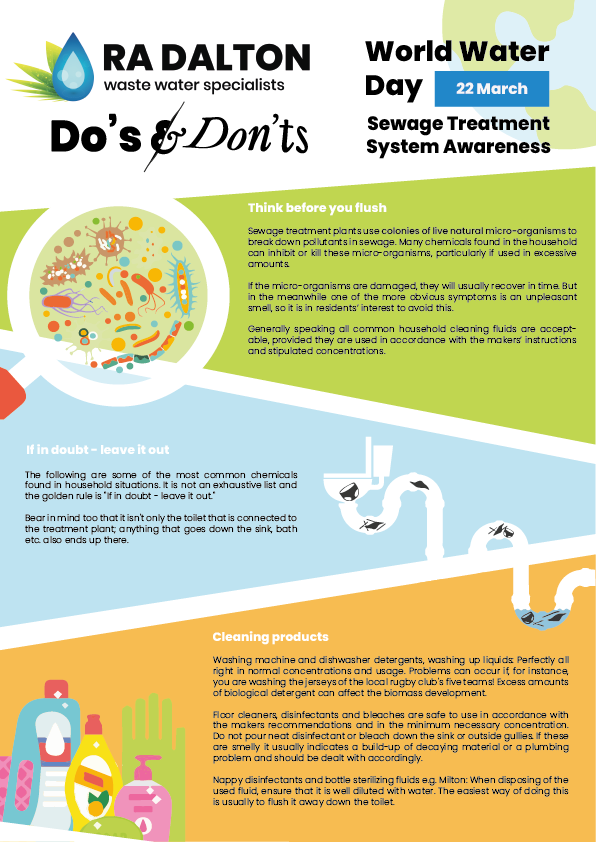
Think Before You Flush
Sewage treatment plants use colonies of live, natural microorganisms to break down pollutants in wastewater. Many household chemicals can inhibit or even kill these microorganisms, especially if used in excessive amounts. If these helpful microbes are damaged, they usually recover over time, but in the meantime, issues like unpleasant odors can arise. To avoid this, residents should use cleaning products responsibly, following the manufacturer’s instructions and recommended concentrations.
If you’re unsure which cleaning products are safe to use, give our friendly team at Direct Drainage a call on 01388 537050 for expert advice.
If in Doubt, Leave It Out
The following are some of the most common household chemicals that can impact sewage treatment systems. This is not an exhaustive list, but the golden rule is: “If in doubt, leave it out.” Remember, it’s not just the toilet that is connected to the treatment system—anything that goes down the sink, bath, or shower ends up there too.
Cleaning Products
✅ Washing Machine and Dishwasher Detergents, Washing-Up Liquids – Safe in normal concentrations. However, excessive amounts, such as washing multiple team kits at once, can disrupt microbial balance.
✅ Floor Cleaners, Disinfectants, and Bleaches – Safe when used in accordance with manufacturer recommendations and at minimal necessary concentrations. Do not pour neat disinfectant or bleach down sinks or outside drains. If there is an unpleasant smell, it usually indicates a build-up of decaying material or a plumbing issue that should be addressed.
✅ Nappy Disinfectants and Bottle Sterilizing Fluids (e.g., Milton) – When disposing of used fluid, always dilute it well with water before flushing it away down the toilet.
Food & Drink Waste
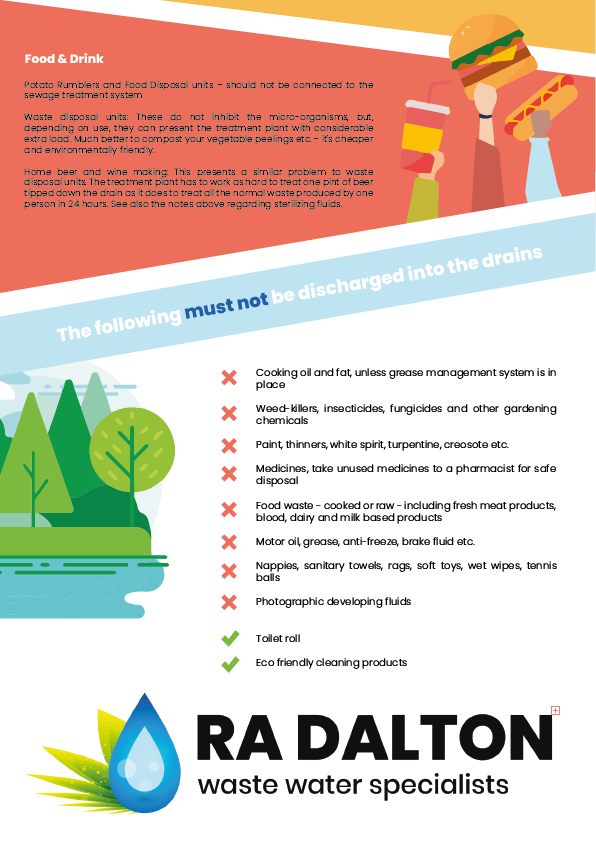
🚫 Potato Rumblers and Food Disposal Units – These should not be connected to a sewage treatment system as they create an additional burden on the plant.
🚫 Waste Disposal Units – Though they don’t directly inhibit microorganisms, they add a considerable load to treatment plants. Composting vegetable peelings is a much better, environmentally friendly alternative.
🚫 Home Beer and Wine Making Waste – Pouring beer or wine down the drain significantly strains the treatment system. The plant has to work as hard to treat one pint of beer as it does to process the daily waste of one person. Be mindful of sterilizing fluids used in brewing as well.
The Bigger Picture
Ensuring that the water we put back into the environment is as clean as possible is essential for protecting our planet’s water resources. By making small, conscious choices in our daily routines, we can contribute to a healthier water cycle, benefiting both nature and future generations.
This World Water Day, let’s commit not only to conserving water but also to preserving its quality. Every drop counts—both the ones we use and the ones we return.
Supporting the next stage of our growth
As RA Dalton continues to grow, we’re looking at how we can develop the way we work to support both our customers and the wider business.
With new opportunities emerging and our customer base continuing to develop, it is vital our internal processes and communication evolve alongside us. This means strengthening how different departments connect and ensuring that we continue to provide the consistent, quality, personable service our customers expect.


Looking Ahead